Ketton Quarry Nature Reserve – Green route
2.4 miles (4 km)
The landscape of the parish has changed considerably over the last 100 years as farmland has become quarry which has subsequently become woodland. The walk includes many signs of the former quarrying and brickmaking. The nature reserve is a Site of Special Scientific Interest famous for its limestone grassland rich in wild flowers, reptiles and butterflies, and managed by the Leicestershire and Rutland Wildlife Trust and its volunteers. The permissive path through the woodland passes some majestic beech trees but beware that the path can be muddy in winter.
1 Ketton Library
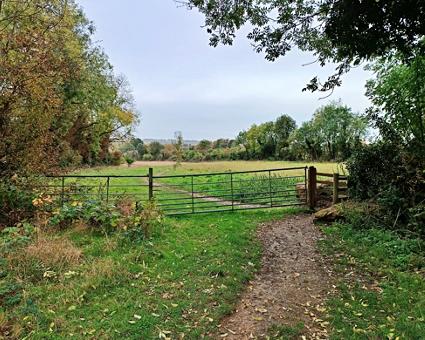
Walk a few yards south-west towards the crossroads to cross the High Street safely at the pelican crossing. Turn right to head north along the High Street. Turn left onto Hunts Lane and by the last houses at the top of the lane turn right into the field and onto the footpath, following it across the field to a gate in the hedge.
2 Long Paddock
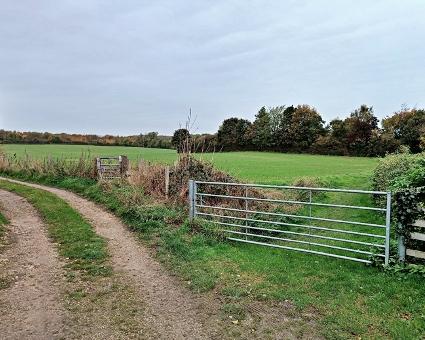
Go through the gate and across Long Paddock to the opposite gate.
The long field has a new orchard on the left planted in 2024. This orchard and the planned wild flower meadow on the right was planted as compensation for the loss of similar wildlife habitats where houses have now been built on Chater Field. This is part of the new Biodiversity Net Gain requirement for all new development.

3 Old Brickworking Sheds
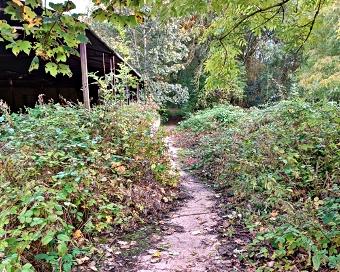
Follow the track ahead keeping the sheds on your right.
The Molesworth brickyards and stone quarries started in the 1850s on land leased from the Northwick Estate. All the old yellow bricks in the village were made from local clay. Probably suitable clay beds ran out and the cost of removing the clay to get to the stone was too expensive. These old brickworking sheds operated up to the 1920s. Ketton bricks were yellow and can be seen in the brickwork of the sheds and some of the older buildings of the village. This was also the site of the original stone works with the derelict stone cutting shed hidden just beyond the old brickworking sheds.
4 Ketton Quarry Nature Reserve
Follow the track through the gate ahead which leads up the hill between the two fenced paddocks.
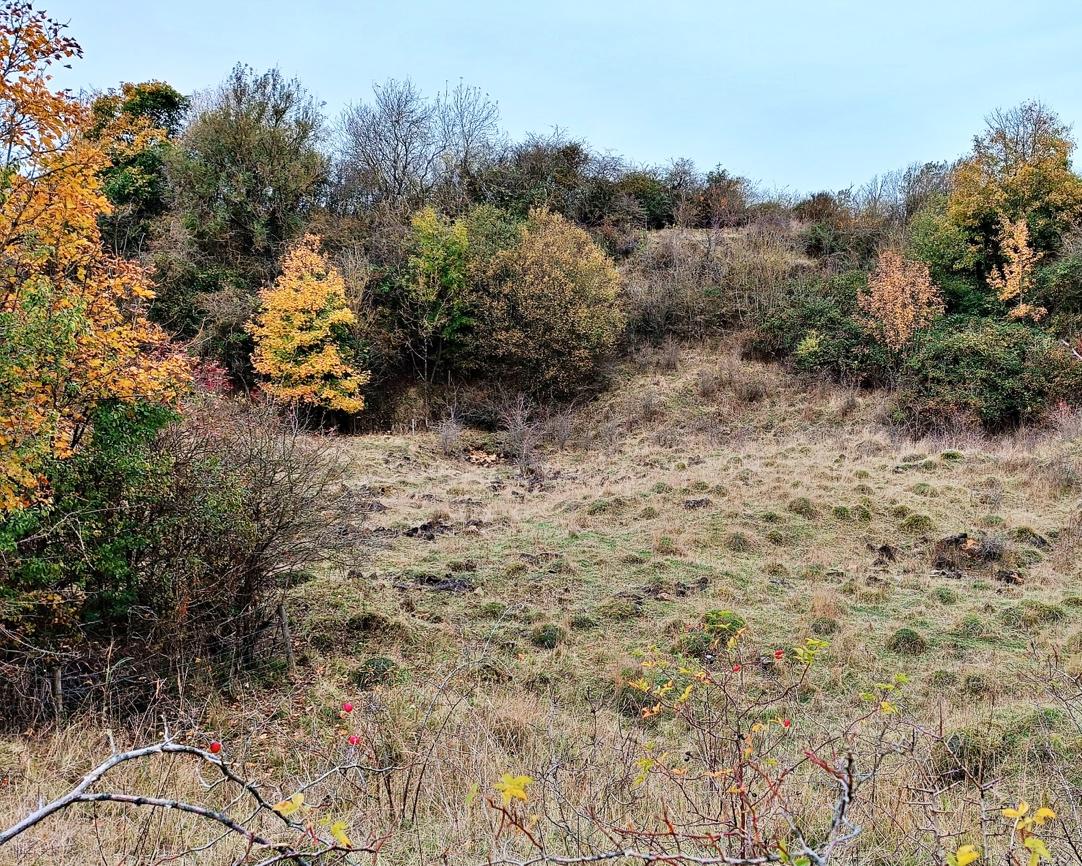
The old quarry is now a nature reserve, managed by the Leicestershire and Rutland Wildlife Trust. It is designated as a Site of Special Scientific Interest (SSSI) by Natural England, as the older workings contain some of the largest remaining examples of limestone grassland and scrub in the county. The hills, holes and rocky outcrops have been colonised by a wide range of calcareous flower species including Cowslip, Bee Orchid, Yellow-wort, Carline Thistle and Autumn Gentian. The diverse plant community also supports a rich variety of invertebrates. The subterranean Yellow Meadow Ants dominate the grassland with their many old anthills harbouring a specialist community of plants and other invertebrates.
5 Start Hill
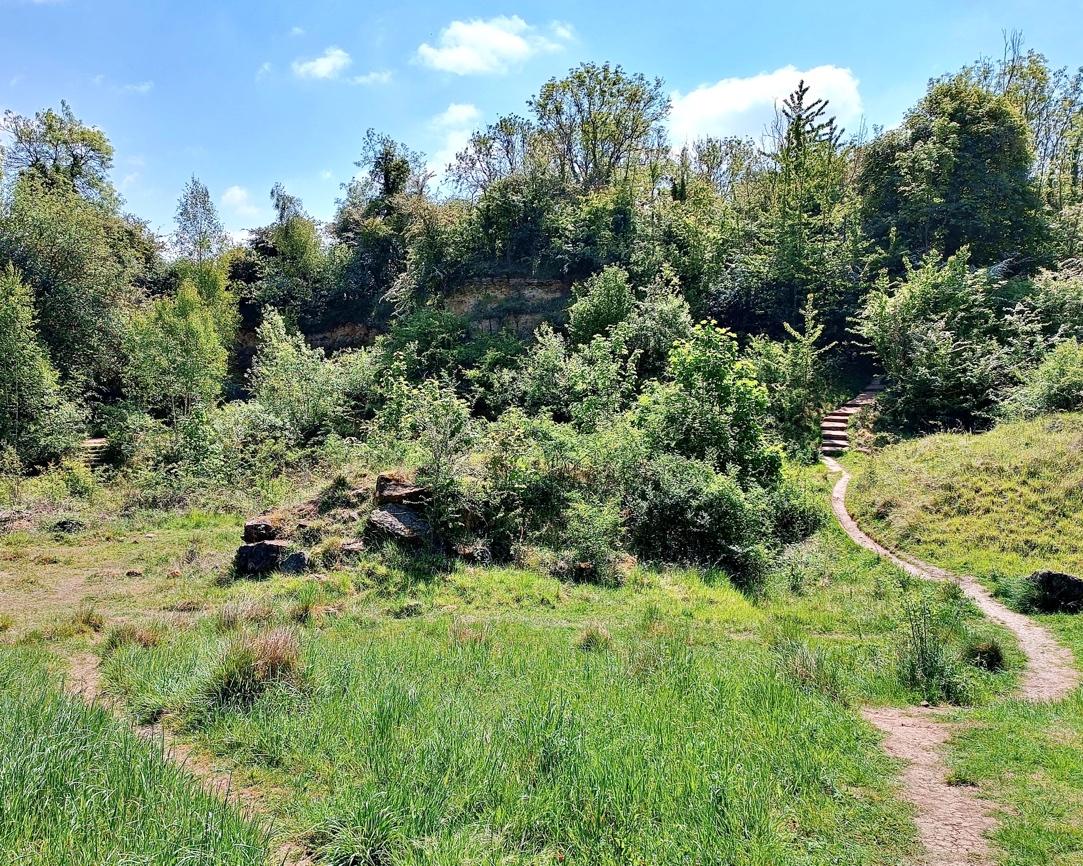
At the top of the hill and the end of the open grassland, follow the path through the right hand kissing gate and into the woodland. The path heads down some steps and into an open area with large rocky outcrops.
This was once part of the nature reserve’s geological trail, but unfortunately this trail has been closed due to rockfalls. As well as being a biological SSSI, the quarry is also a geological SSSI, with exposures of limestone and clay from the Middle Jurassic period (165-175 million years ago). This area is also one of the best places in the county for reptiles such as Adders and Common Lizards, basking in the sunshine on a warm day. Look back from here to see the rock exposures.
6 Small Meadow
After passing through a gateway into the small meadow, keep left.
To your right is a car park which can be used by visitors to the nature reserve. In early summer, look for Bee Orchids and Viper’s Bugloss in this meadow, and Glowworms at night in early July. Butterflies include Marbled White, Dingy Skipper and Grizzled Skipper and many rare moths have been recorded here.
7 The Dell
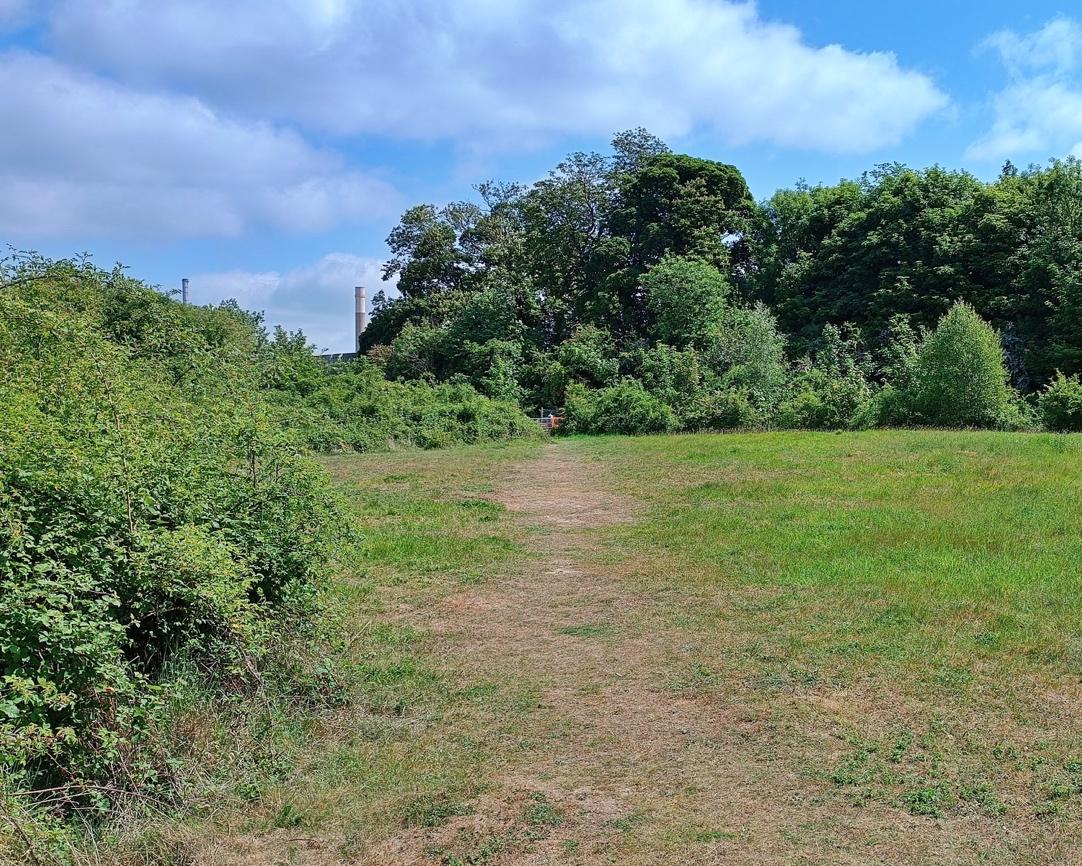
Go through the kissing gate to find yourself in a small wooded valley, the Dell. Follow the path and at the end, climb the steps and go through another kissing gate into the woodland.
This was one of the last parts of the old quarry to be actively quarried, in the 1920s. There is plenty of evidence of this former use as you head up the valley, including an old trackway, a large metal bucket for transporting stone and sections of overhead wire which would have carried the stone buckets. There is even a pile of stone left over from the last order supplied from here, which was destined to be used at the rear of Buckingham Palace.

8 The Woodland Glade
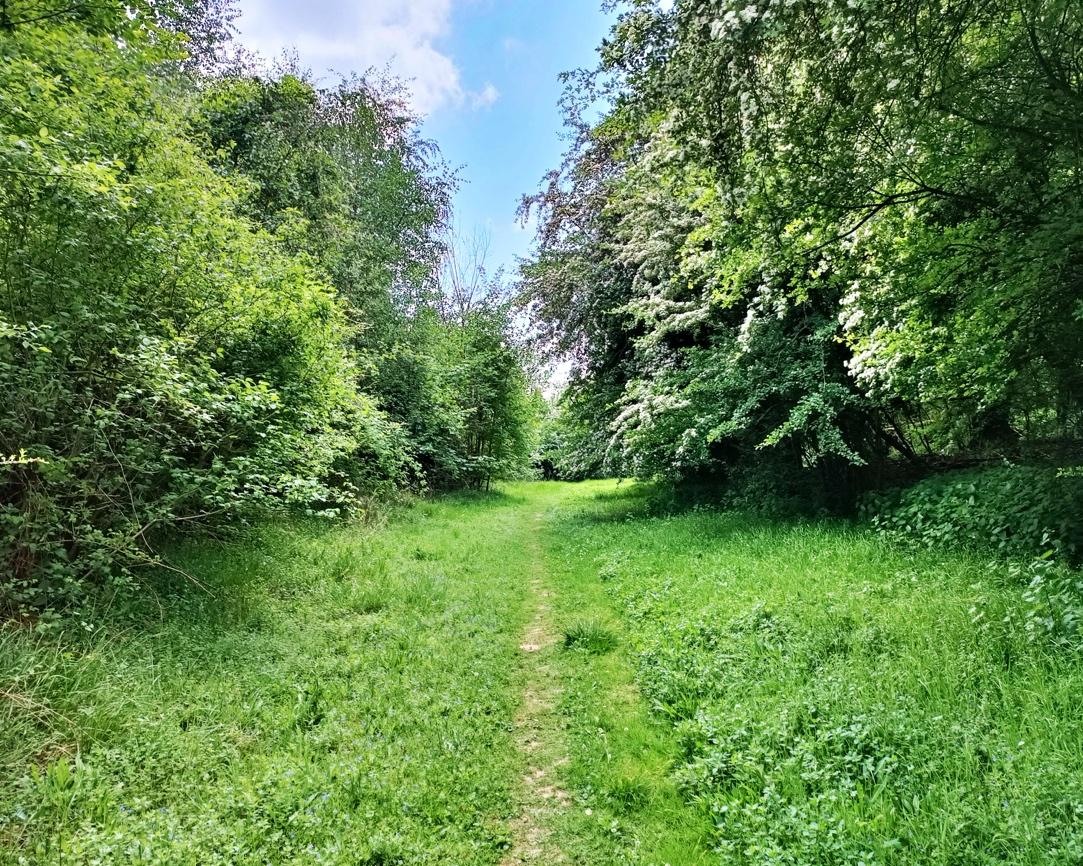
Follow the middle path through the woodland. About 10m up this path there is a short detour (of about 150m) along a path that forks to the right leading to a glade.
This secondary ash woodland has developed after hawthorn scrub on the oldest spoil heaps of the old quarry. Like many of the ash trees in the area it is now infected with the Ash Dieback fungus. The woodland glade is rich in plants such as Marjoram and Deadly Nightshade. From the very end of this glade there are views across the central part of the active quarry, including the 12MW solar farm.
9 Beech Plantation and Avenue
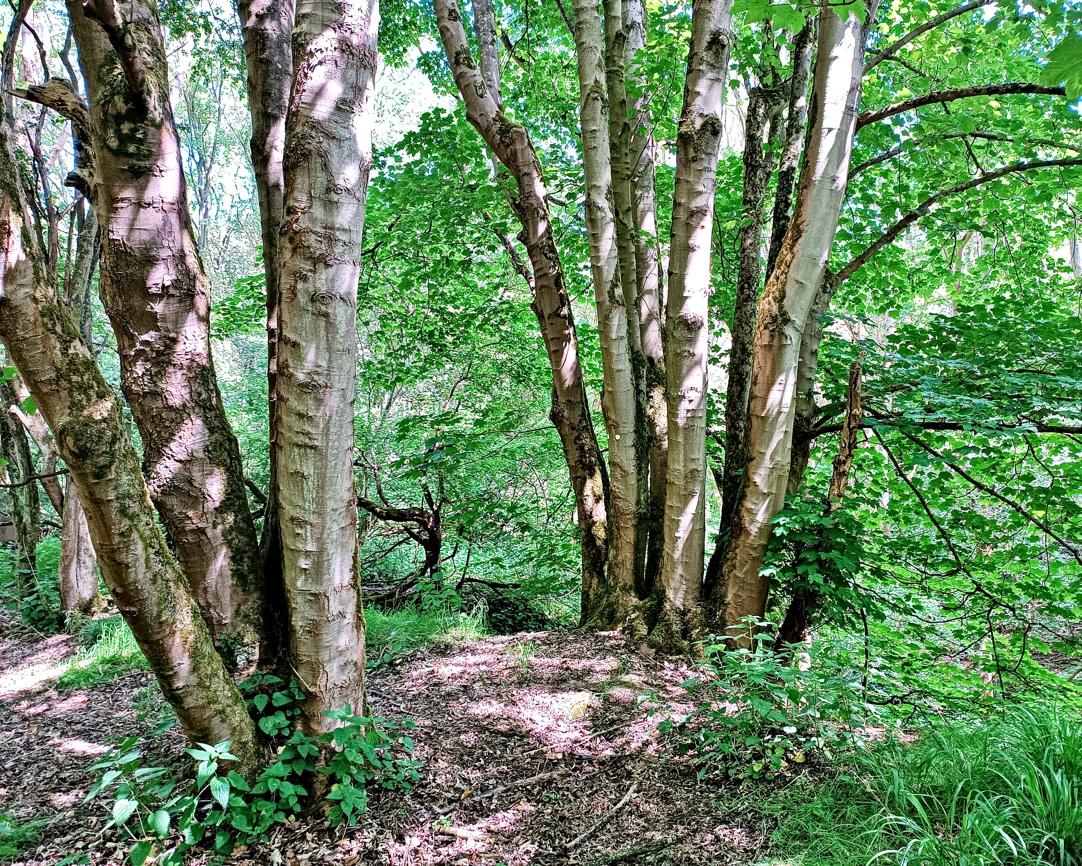
Retrace your steps to the junction with the middle path through the wood and turn right. At the western end of the woodland, turn left to walk up an impressive avenue of beech trees.
On the right of the wooded path before you reach the beech plantation, an old field boundary is visible with old ash trees and below are several old deep quarry pits. The beech plantation was planted in the 1920s with stock taken from the Chilterns, which may explain the presence of the parasitic plant Yellow Bird’s-Nest, which occurs nowhere else in Leicestershire and Rutland. In several places the woodland floor is full of Beech, Hawthorn and Ash seedlings waiting for the additional sunlight when some surrounding tall trees have fallen. The original planting included conifers as nurse crops in between the rows of young Beech trees. All the straight conifer trunks are now slowly rotting on the woodland floor.

10 The Quarry Boundary
Turn left again at the end of the avenue to head back through the woodland parallel to the edge of the active quarry. Follow the path through the woodland to emerge in the open by a kissing gate close to the fenced edge of the quarry). Beware that it is a muddy path in the winter.
All the limestone has now been mined from the deep quarry and the steep cliffs have been restored with sloping banks of limestone grassland. The restoration plan does not show the lake in the bottom of the quarry. It appeared naturally in 2023 when quarrying was completed so the base of this quarry may naturally regenerate as a wetland wildlife area. From here there are excellent views across the quarry to the village of Collyweston and Rockingham Forest on the other side of the Welland Valley.


11 Wild Fruit Path
Go through the kissing gate to leave the nature reserve and follow the edge of the quarry, taking the right fork to continue to follow the fence down to the long track.
A wild fruit path was planted between the footpath and the quarry fence by volunteers from Ketton Green Spaces Group in 2022. It includes fruiting tree species such as Wild Pear, Damson, Wild Service Tree, Wild Crab Apple, Gean and Cherry Plum.
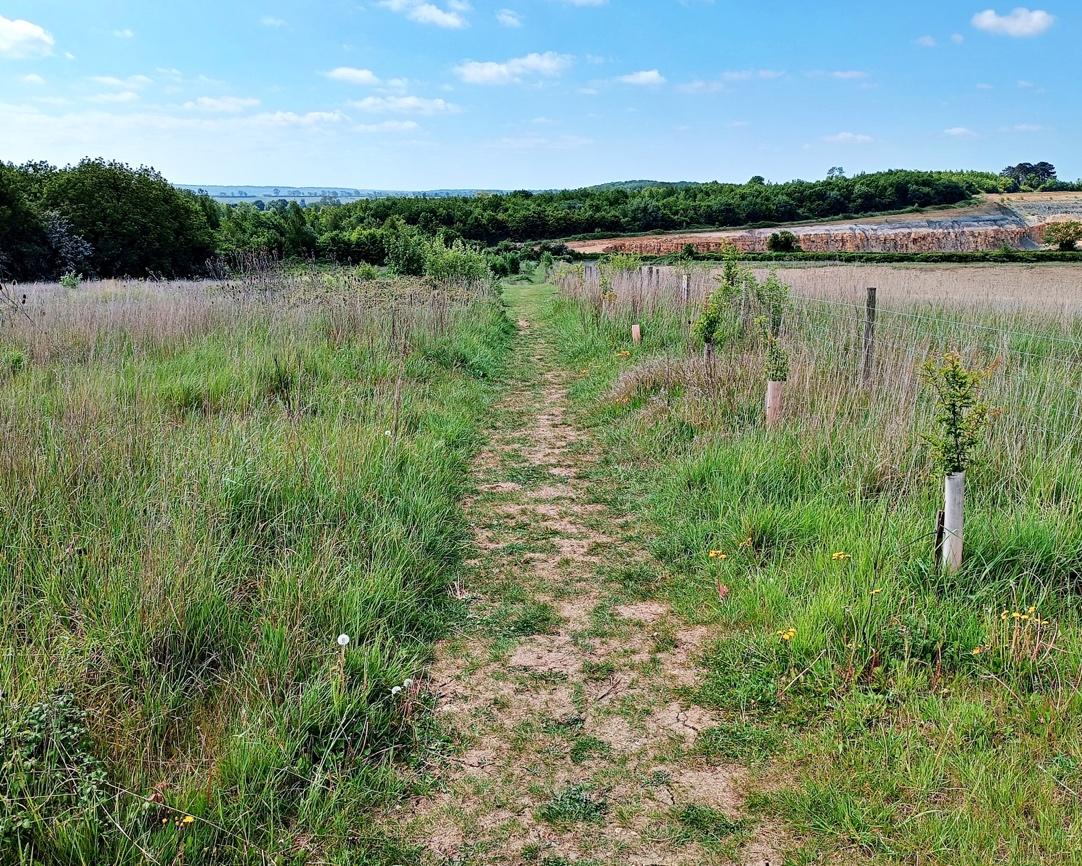
12 Long Ridge Path and new woodland
Turn left at the T junction to head down the hill towards the village.
Just before the gateway back into Long Paddock, a permissive path leads to the right into a young woodland plantation. This was planted in about 2000 to screen the working quarry. It is possible to follow a path along a ridge through the trees or to walk along a wide grassy ride. The plantation ends at Empingham Road, making this a potential alternative route back to the village, and there are further excellent views across the Welland valley.

13 Long Paddock
Follow the long track down Long Paddock and turn right along the High Street back to the Ketton Library.
Another alternative route back to the Ketton Library is around the new housing development at the end of Long Paddock. This is based on the restoration of some of the old stone buildings of Home Farm. This was the last farm to operate in the centre of the village and closed in about 2020. This walk follows much of its former farmland.